

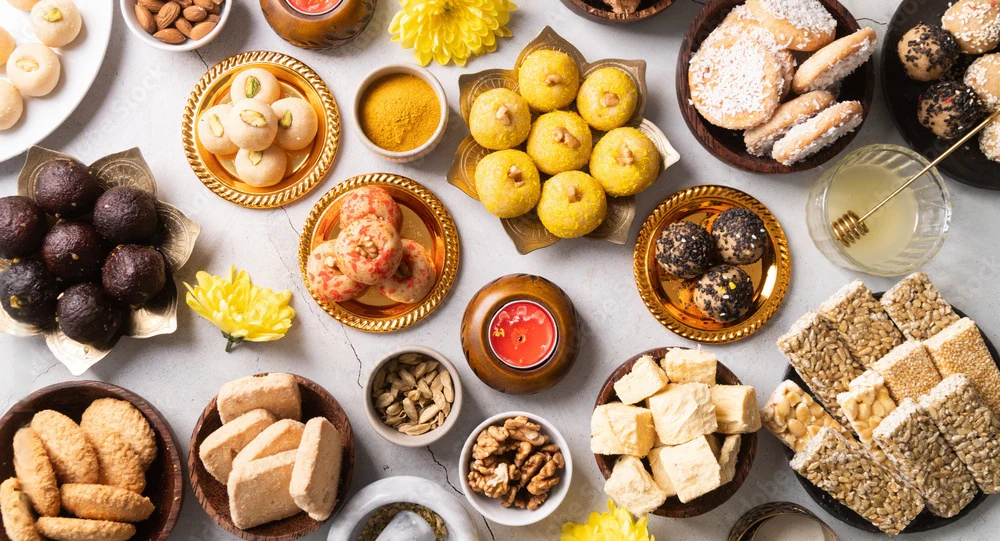
Indian Desserts: The Heart of Every Festival
In India, festivals are not just about traditions and rituals; they are also about food, especially sweets! Desserts, or mithai, play a vital role in every celebration, symbolizing joy, prosperity, and togetherness. Whether it’s Diwali, Holi, Eid, or Pongal, every festival comes with its own signature sweets, making them an inseparable part of Indian culture.
Why Are Sweets So Important in Indian Festivals?
Symbol of Auspiciousness & Prosperity
Indian festivals often mark new beginnings, victories, and divine blessings. Sweets are considered a sign of good luck and prosperity, offered to deities before being shared with loved ones.
Strengthening Bonds & Togetherness
Festivals bring families and communities together, and sharing homemade or gifted sweets fosters warmth and affection. A box of sweets is the most common and cherished gift exchanged during celebrations.
Religious & Cultural Significance
Many Indian desserts are deeply rooted in religious traditions. For instance, modaks are offered to Lord Ganesha during Ganesh Chaturthi, while peda and ladoos are distributed in temples as prasad (holy offerings).
Regional & Seasonal Specialties
India’s festivals are often linked to seasonal changes, influencing the type of sweets prepared. Tilgul (sesame-jaggery sweets) are eaten during Makar Sankranti to keep warm in winter, while pheerni and falooda are enjoyed during Eid in summer.
Famous Indian Desserts & Their Festival Connections
Diwali – The Festival of Sweets
Diwali, the festival of lights, is incomplete without an array of sweets. Families prepare and exchange ladoos, kaju katli, gulab jamun, and barfis to celebrate the victory of light over darkness.
Holi – A Splash of Colors & Flavors
Holi, the festival of colors, is all about gujiyas, deep-fried dumplings stuffed with sweet khoya and dry fruits. Thandai, a spiced, nutty milk drink, is also popular during Holi celebrations.
Eid – A Feast for the Soul
Eid is a time for feasting, and no celebration is complete without sewaiyan (vermicelli pudding), shahi tukda, and sheer khurma, all made with milk, dry fruits, and saffron.
Pongal & Makar Sankranti – Harvest Festivals
In South India, Sakkarai Pongal, a sweet rice dish with jaggery and ghee, is prepared during Pongal. Meanwhile, in North India, til ladoo (sesame-jaggery balls) and petha are popular for Makar Sankranti.
Ganesh Chaturthi – The Love for Modaks
Modaks, both steamed (ukadiche modak) and fried, are offered to Lord Ganesha as they are believed to be his favorite. These sweet dumplings symbolize devotion and are enjoyed across Maharashtra and beyond.
Navratri & Durga Puja – Sweets as Divine Offerings
During Navratri and Durga Puja, mishti doi (sweetened yogurt), sandesh, and rasgulla are widely consumed, especially in Bengal, as part of the festive feast and divine offerings.
The Sweet Essence of Indian Festivals
Indian desserts are more than just food—they carry emotions, traditions, and a deep sense of community. Every sweet has a story, a ritual, and a reason behind its significance, making Indian festivals all the more special.
So, whether you’re savoring a warm gulab jamun during Diwali or sharing a plate of sheer khurma on Eid, every bite connects you to centuries of tradition and joy.
What’s your favorite festival sweet? Let us know in the comments!